How to Plan a Corporate Holiday Party: 2026 Guide

Table of Contents
How to Plan a Corporate Holiday Party: Start With a Planning Timeline
The 12-Week Planning Timeline
Corporate Holiday Party Ideas That Fit Your Team
In-Person, Virtual, and Hybrid Formats
Building a Corporate Holiday Party Budget That Holds
Start With a Per-Person Number, Not a Lump Sum
Where the Money Actually Goes
The Cost Drivers That Move the Number Most
Ways to Control Spending Without Cutting the Experience
Track Actuals Against the Plan
Choosing a Venue, Vendors, and a Date That Works
Your Office Holiday Party Planning Checklist
Corporate Holiday Party Invitation Wording and Guest Experience
Risk Management, Policies, and Inclusive Design
Alcohol Service and Transportation
Safety, Conduct, and Contingency Planning
Inclusive Design That Actually Works
Document Your Decisions
Conclusion: Measure, Thank, and Plan the Next One
Frequently Asked Questions
Last Updated: October 5, 2026
How to Plan a Corporate Holiday Party: Start With a Planning Timeline
A corporate holiday party is a company-hosted seasonal celebration for employees, and planning one well comes down to starting early. This guide from Duval Grand Event Venue walks through the full process, from the first calendar hold to the thank-you notes.
You don't need a huge budget or a full events team, just a timeline, a realistic number, and a clear sense of what your people want.
The 12-Week Planning Timeline
Twelve weeks is the sweet spot: long enough to book a venue and vendors, short enough that momentum doesn't stall.
Weeks 12-10: Set the date, confirm the budget, and build your guest list.
Weeks 10-8: Book the venue and lock in catering.
Weeks 8-6: Arrange entertainment, décor, and any group activities.
Weeks 6-4: Send invitations and open RSVPs.
Pro Tip Book your venue before you book anything else. Once the date and space are locked, every other vendor can work around them. Doing it in reverse is how timelines fall apart.
Corporate Holiday Party Ideas That Fit Your Team
The best corporate holiday party ideas match your team's personality, not a Pinterest board. A quiet accounting team and a sales floor of extroverts need different events, so ask what your people enjoyed last year and build from there.
Popular formats include:
Cocktail and dinner receptions for a classic, elegant feel
Themed parties like a speakeasy, winter wonderland, or ugly sweater night
Group activities such as paint and sip, calligraphy, or gingerbread house decorating
Casual potlucks for smaller teams on tight budgets

In-Person, Virtual, and Hybrid Formats
In-person events build the strongest connections, but a virtual party works well for remote teams across time zones, and hybrid events let in-office staff gather while remote colleagues join on screen. Virtual events cost less and include everyone, but rarely create the same energy. If you go hybrid, invest in good audio and a host who keeps both audiences engaged.
Watch Out Don't plan a hybrid event and treat the remote guests as an afterthought. If the camera points at a room full of people laughing at inside jokes, remote attendees check out within minutes.
Building a Corporate Holiday Party Budget That Holds
A corporate holiday party budget should be set before you book anything. Decide the total first, then divide it across categories so you don't overspend on one item and scramble later.
Start With a Per-Person Number, Not a Lump Sum
The most useful budgeting move is to convert your total into a per-guest figure: allocate a per-head amount for food and beverage, then layer fixed costs (venue, entertainment, décor) on top.
Work backward from attendance. If you expect 120 guests and your food-and-beverage allocation is $75 per person, that line is $9,000 before tax and gratuity. Many venues and caterers quote food and beverage minimums rather than flat fees, so confirm whether your spend counts toward a minimum and what happens if you fall short.
Where the Money Actually Goes
Most budgets break into a few core buckets, and the split shifts with format:
Venue and space rental, often a flat fee, a food-and-beverage minimum, or both
Food and beverages, usually the largest line item, and the one most sensitive to guest count
Entertainment and activities, DJ, band, photo booth, or hosted craft stations
Décor and lighting, rental vs. purchase changes the math significantly
That contingency line matters: guest counts shift and vendors adjust, so a cushion means one surprise doesn't wreck the whole plan.
The Cost Drivers That Move the Number Most
Four variables swing a holiday party budget more than anything else:
Date and day of week. Peak demand runs the last two weeks of December, and Saturday nights carry the highest premiums. A weeknight in early December often costs meaningfully less for the same room and menu.
Guest count. Every added head compounds across food, beverage, seating, and staffing.
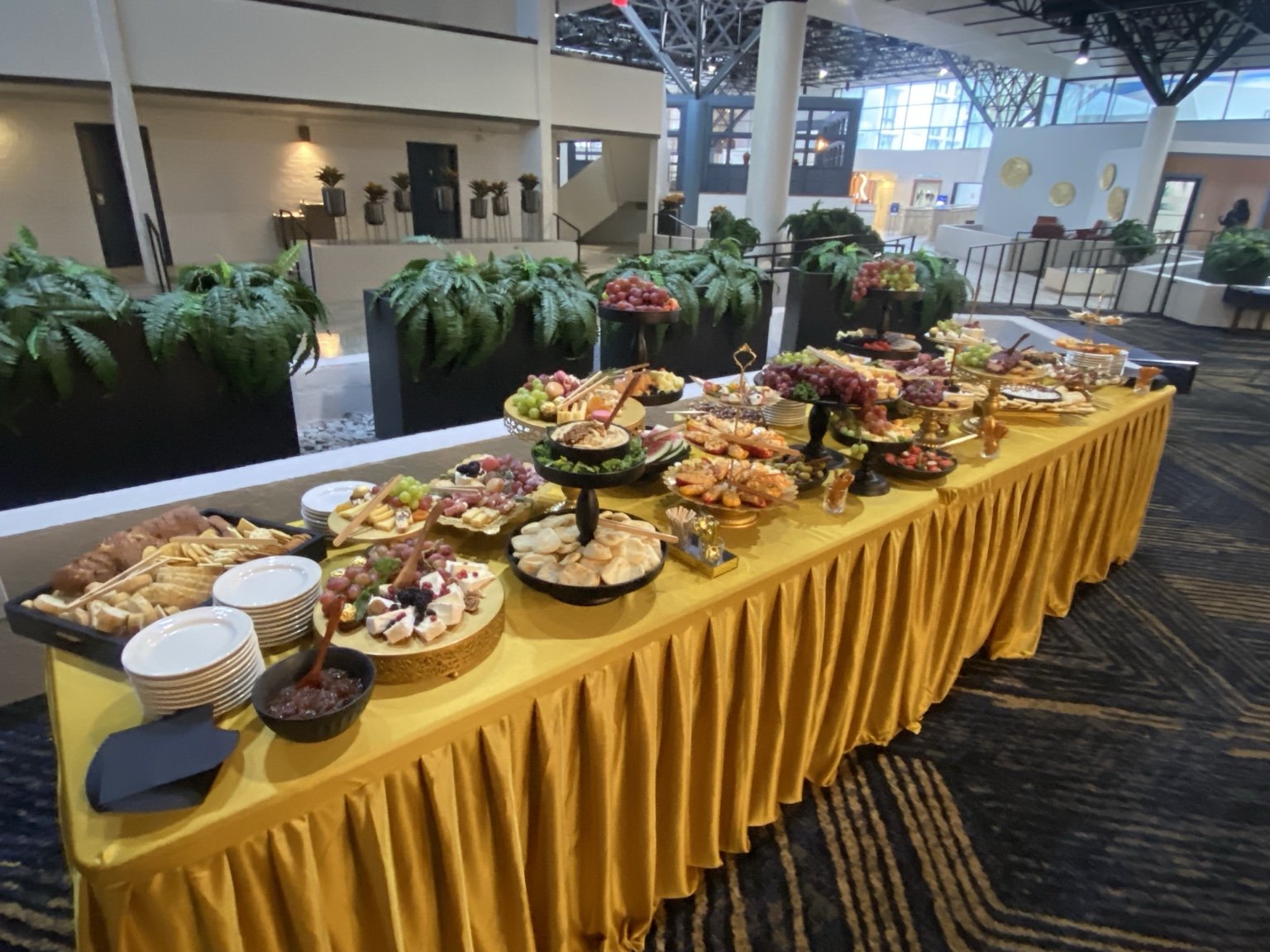
Service style. A plated dinner costs more per head than a buffet, which costs more than heavy appetizers and stations. Passed hors d'oeuvres and a hosted bar are the two lines that quietly blow up budgets.
Alcohol structure. A hosted open bar is the most expensive option. A consumption bar (pay by the drink), a limited signature-cocktail menu, or a drink-ticket system each cap exposure differently. A cash bar shifts cost to guests but changes the feel of the event.
Ways to Control Spending Without Cutting the Experience
Move off-peak. Early December weeknights and January dates unlock lower rates.
Trim the guest list deliberately. Decide whether plus-ones are included before you set the headcount, since that single decision can add 20-30% to your total.
Choose stations over plated. Guests eat well and you control portions.
Limit the bar. A two-hour hosted window followed by a cash bar is a common compromise.
Pricing for venues and catering depends on your date, guest count, and menu, so request written quotes early and compare them side by side, line by line, not just on the bottom number. For current rates at our space, Duval Grand Event Venue can walk you through options.
Pro Tip Ask every vendor what is not included. Tax, service charges, gratuity, overtime, and setup fees are the usual suspects that turn a quote into a surprise.
Track Actuals Against the Plan
Keep a spreadsheet with three columns, estimated, quoted, and actual, and update it as contracts come in. By the event's end you'll know your budget variance, the most useful number for planning next year's party.
Choosing a Venue, Vendors, and a Date That Works
Venue, vendors, and date shape everything else. Start with the date: avoid the last two weeks of December, when demand peaks and prices climb. A weeknight in early December often costs less and gets better attendance than a Saturday close to the holidays.
For the venue, check the basics first:
Does the capacity fit your guest count?
Is there on-site parking or nearby transit?
Does it include catering, or can you bring your own?
Is the space accessible for guests with mobility needs?
When you compare vendors, ask for written quotes and read contracts closely, deposit terms, cancellation policies, and what happens if a vendor cancels.
Your Office Holiday Party Planning Checklist
An office holiday party planning checklist keeps details from slipping through the cracks. Work through it in order.
Confirm the date and secure the venue
Set the budget and get approval
Build the guest list and track RSVPs
Book catering and confirm dietary options
Key Takeaway The checklist isn't busywork. Each item is a decision that, if missed, becomes a fire you're putting out the day of the event.
Corporate Holiday Party Invitation Wording and Guest Experience
Corporate holiday party invitation wording should tell guests everything in one glance.
A simple template:
You're invited to [Company]'s Holiday Party Date: [Day, Month Date, Year] Time: [Start] to [End] Location: [Venue Name and Address] Dress code: [Festive casual / Cocktail / Business casual] Please RSVP by [Date] at [Link or Email] Questions? Contact [Name] at [Email]
Add a line about dietary needs and a plus-one policy if those apply. Clear wording cuts down on the back-and-forth emails.
Guest experience goes beyond the invite. Think about how people arrive, where they put their coats, and whether there's a quiet space for anyone who needs a break.
Risk Management, Policies, and Inclusive Design
Risk management for a corporate holiday party covers alcohol, safety, transportation, and workplace policy. Check your organization's policies on gifts, plus-ones, and off-site events before finalizing anything, and loop in HR early if the event is company-sponsored.
Alcohol Service and Transportation
If you serve alcohol, plan for how people get home before the first drink is poured. Common approaches:
Ride credits or a rideshare code. Subsidize rides home so no one drives after drinking. This is the most direct risk control.
Shuttles. A loop between the venue and a central pickup point or hotel block.
Designated drivers or a car service for leadership and anyone who needs it.
A cut-off time. Close the bar well before the event ends so guests have time to sober up and arrange a ride.
Set expectations in advance: a line in the invitation or a pre-event email, "please drink responsibly and use the provided ride code", signals the company takes it seriously. Confirm with your venue or caterer whether they carry liquor liability coverage and whether servers are trained to check IDs and refuse over-service.
Safety, Conduct, and Contingency Planning
A few practical safeguards go a long way:
Know the venue's emergency exits and capacity limits. Walk the space before the event.
Have a point person. One planner or manager should be reachable all night for issues.
Set a conduct expectation. Harassment policies don't pause at the party. Remind attendees that workplace standards apply.
Plan for a vendor no-show. Keep backup contact numbers and a contingency for entertainment, catering, or A/V.
Inclusive Design That Actually Works
Inclusive design means planning for everyone, not just the majority. Build these in from the start:
Dietary needs. Ask on the RSVP for vegetarian, vegan, gluten-free, and allergy requirements, and confirm the caterer can label dishes clearly. Nut and shellfish allergies are the ones to flag explicitly.
Accessibility. Confirm step-free entry, accessible restrooms, and seating for guests with mobility needs. For sensory needs, designate a quieter room away from the music and crowd.
Alcohol-free participation. Offer mocktails and non-alcoholic options that look and feel like the real thing, so guests who don't drink aren't stuck with water.
Cultural and religious considerations. Not everyone celebrates the same holiday. A neutral "year-end celebration" framing, or a menu that respects dietary restrictions tied to religious observance, helps everyone feel included.
Watch Out Don't treat accessibility and dietary needs as a last-minute checkbox. They take lead time with vendors, and getting them wrong is the fastest way to make a guest feel like an afterthought.
Document Your Decisions
Keep a short risk and policy log: who approved the alcohol plan, what transportation was arranged, which accommodations were requested, and what contingencies exist. If anything goes wrong you'll have a clear record, and next year's planner gets a head start.
Conclusion: Measure, Thank, and Plan the Next One
After the event, send a thank-you note and gather quick feedback. A short survey on what worked and what didn't gives you a head start on next year, track attendance, note what people loved, and file it away.
Planning a corporate holiday party doesn't have to be stressful. At Duval Grand Event Venue, we handle full-service planning, on-site catering, and block room rates so your guests can stay close to the celebration.
Frequently Asked Questions
How much does a corporate holiday party cost?
Costs depend on guest count, venue, catering, and entertainment, and pricing varies by market and date. A corporate holiday party budget typically covers venue rental, food and beverages, decorations, entertainment, staffing, and gratuity. Build your budget around a per-person figure, then add a 10 to 15 percent contingency for last-minute changes. For a specific quote, contact venues directly with your headcount and preferred dates.
When should you start planning a corporate holiday party?
Start 10 to 12 weeks before the event date, and book the venue first since December dates fill quickly. Send save-the-dates about eight weeks out, then formal invitations four to six weeks before the party. Finalize the catering headcount and vendor arrival times one week ahead. If your party falls on a popular Friday or Saturday in December, add two to three weeks to that timeline.
How do you plan an inclusive workplace holiday party?
Choose a seasonal celebration theme rather than one tied to a single holiday, and offer food options that cover dietary needs like vegetarian, gluten-free, and halal. Pick a venue with step-free access and quiet space for guests who need a break. Plan relaxed activities such as decorating stations or a photo booth so attendance is optional, not forced. Ask employees about needs when you send the RSVP form.
What should be included in a corporate holiday party budget?
A complete corporate holiday party budget lists venue rental, catering and bar service, decorations, entertainment or group activities, AV and lighting, staffing and gratuity, invitations, transportation, and a contingency line. Track deposits and final payments separately so nothing slips. Review the budget against actual invoices after the event to see where costs landed and what to adjust next year.
Get Started

Comments